Why Click and Open Reports Don't Prove a Single Sale
Activity metrics tell you what happened inside the campaign. They do not tell you who walked in and bought.

TL;DR
Opens, clicks, and impressions measure attention, not revenue. To know if marketing worked, you have to match the names you reached against the names that actually bought, which is what matchback does. Activity reports are useful for diagnostics, but they cannot stand in for proof of sales.
Activity reports measure what happened inside a campaign: how many people opened an email, clicked a link, or saw an ad. They do not measure who bought. A sale is proven by matching the people you reached against the people who actually closed, not by counting clicks.
This matters because attention and revenue are different things. A campaign can produce strong open and click numbers and still sell nothing. Another can look quiet on paper and still drive named buyers through your door. If you only read the activity report, you cannot tell those two apart.
What does an activity report actually measure?
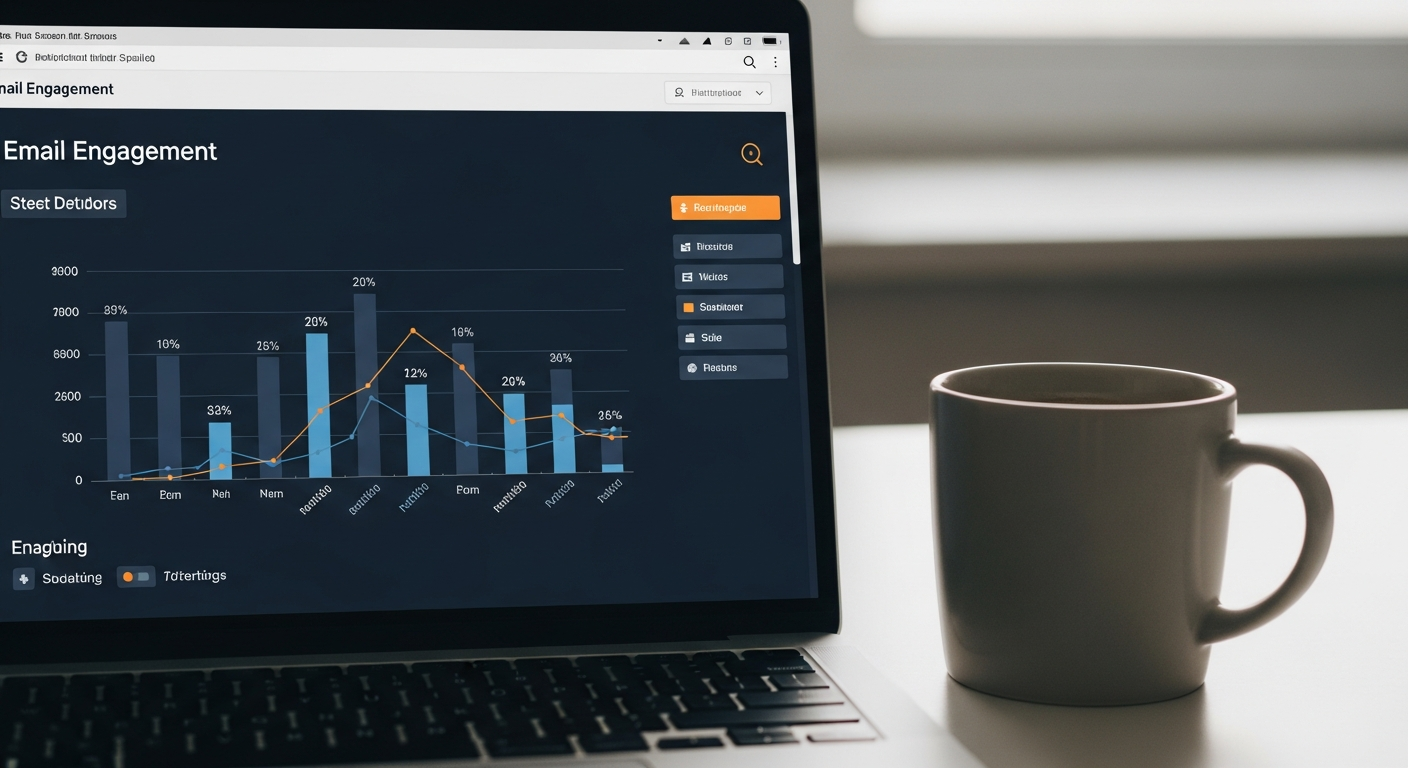
It measures behavior at the top of the funnel. Common metrics include impressions, opens, clicks, click-through rate, and bounce rate.
Each of these is a proxy. An open means an email was rendered, usually counted by a loaded tracking pixel. A click means someone tapped a link. An impression means an ad was served to a screen.
None of these confirm a purchase. They confirm your message reached a device and got a reaction. That is worth knowing, but it is the start of the story, not the end.
Why don't clicks and opens prove a sale?
Because the path from a click to a purchase is long, and most of it is invisible to the activity report.
A person can click and never buy. A person can buy after seeing your ad without ever clicking it. A person can open your email, forget it, and walk into your store two weeks later because a friend mentioned you. The report sees none of that.
There is also a specific measurement problem with opens. Apple's Mail Privacy Protection, introduced in 2021, preloads email content including tracking pixels, which inflates open counts for Apple Mail users whether or not they actually read the message. So even the open number, which many treat as a reliable baseline, is softer than it looks.
The honest summary: activity metrics describe engagement with the message. They do not describe the outcome you are paying for.
Want this working on your numbers?
Viewmedia makes marketing you can prove, matched to real, closed sales.
What does it take to prove a sale instead?

You match the list of people you marketed to against the list of people who bought. This is called matchback.
The logic is straightforward. You start with your campaign audience, the named households or contacts you reached. Then you pull your sales records for the same period. Where a name appears in both lists, you have a candidate sale tied to the campaign.
This shifts the question from "did people engage?" to "did the people we paid to reach become customers?" That second question is the one an owner-operator actually cares about. You can read more about the method on our Matchback Reporting page and the broader approach on Provable Marketing.
Matchback is not perfect. It cannot prove the ad alone caused the purchase, since other factors influence buyers too. But it ties spend to named, closed sales in a way an open rate never can.
Are activity reports useless, then?
No. They are useful for diagnosis, just not for proof.
A low email open rate signals a problem with your subject lines, your send timing, or your list quality. High clicks with flat sales point to a weak landing page or a weak offer. Activity data helps you find what to fix.
The mistake is treating diagnostic metrics as outcome metrics. An open rate tells you the envelope got opened. It does not tell you the deal got done.
For consumer email specifically, Viewmedia guarantees a 15% open rate on consumer email campaigns. That is a delivery-and-engagement floor, and it is the only performance number we guarantee. We do not promise a click number or a sales number, because those depend on your offer and your market, and we will not pretend otherwise.
How should you read the two reports together?
Use the activity report to improve the campaign. Use the matchback report to judge the result.
Read activity data weekly while the campaign runs so you can adjust subject lines, creative, or targeting. Read matchback data after the buying window closes so you can see which named buyers came through and what they spent.
When you separate those two jobs, the numbers stop competing. The activity report becomes a tuning tool. The matchback report becomes the answer to the only question that decides your next budget: did this pay for itself? You can see exactly how that question gets answered in What Matchback Reporting Actually Proves About Your Marketing.
If a term in this article is unfamiliar, the Glossary has plain definitions.
Founder, Viewmedia
Brian Wroblewski is the founder of Viewmedia. For more than two decades he has helped local and regional businesses turn marketing spend into provable, closed sales.