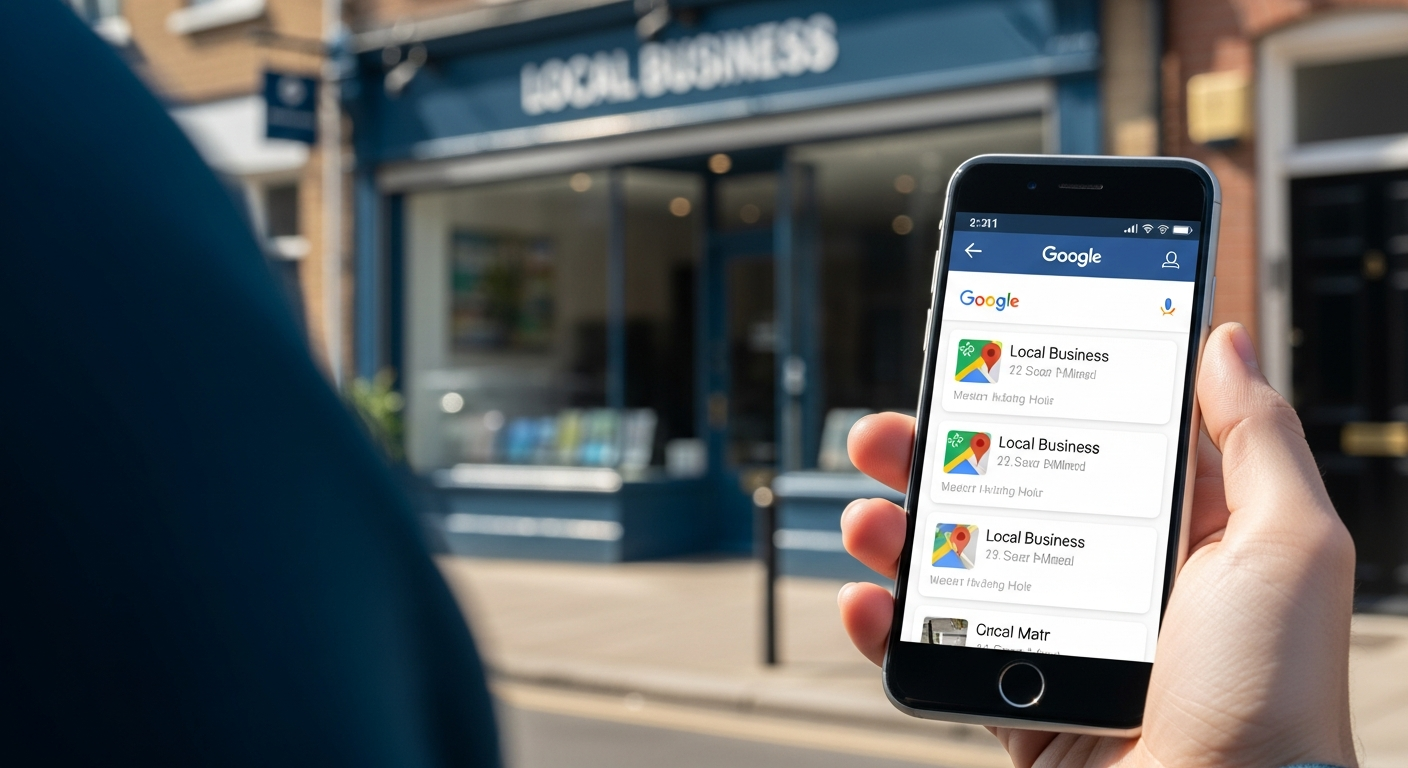
The Complete Digital Presence Checklist for a Local Business
A plain, ordered list of everything a local business needs so customers, Google, and AI answer engines can all find the same accurate information.

TL;DR
A local business needs a working website, a claimed and complete Google Business Profile, consistent name-address-phone details across the web, a steady flow of reviews, and a way to keep in touch with past customers. Get those five foundations right before you spend on anything fancier. This checklist walks through each item in the order that matters.
A complete digital presence for a local business comes down to five things: a website that loads and explains what you do, a claimed and complete Google Business Profile, the same name, address, and phone number everywhere you appear, a steady stream of recent reviews, and a way to stay in touch with people who already bought from you. Get those in order first. Everything else is extra.
The checklist below is ordered on purpose. Each item builds on the one before it, so working top to bottom is faster than jumping around.
What has to exist before anything else works?

Two things: a website you control and a claimed Google Business Profile. Without both, the rest of the checklist has nowhere to point.
Your website is the one place online you fully own. Social profiles and directory listings can change their rules or disappear. Your site cannot be taken from you, so it should hold the definitive version of your hours, services, service area, and contact details.
The Google Business Profile is the free listing that determines whether you appear in Google Maps and the local pack, the small map with three businesses that sits near the top of local search results. Google confirms that a complete and accurate profile helps customers find and choose your business, and that verification is required before your listing goes public (Google Business Profile Help).
If you only do two things this month, claim and verify that profile, and make sure your website is live and clearly explains what you do and where.
What does a findable website actually need?
A findable website answers four questions on the first screen: what you do, where you do it, how to reach you, and what to do next. Everything else is secondary.
The working list:
- A clear description of your services in plain words, not jargon
- Your city and service area named in text, not buried in an image
- Your name, address, and phone number, ideally in the footer of every page
- A phone number that is tappable on a mobile screen
- Pages that load quickly and read well on a phone
- A secure connection, shown by the padlock and the https prefix
Google has said for years that mobile-friendliness and page experience affect how pages are ranked and shown. Most local searches happen on a phone, so if your site is hard to use on a small screen, you lose people before they ever call.
One page per major service tends to work better than one long page listing everything. It gives search engines and AI tools a clear, specific answer to match against a specific question.
Why does consistent business information matter so much?
Because Google and AI answer engines cross-check your details against many sources, and mismatches make them less confident about what is true. Your business name, address, and phone number should read identically everywhere.
This is often called NAP consistency: name, address, phone. If your website says "Suite 200," your Facebook page says "Ste 200," and an old directory lists a number you dropped two years ago, each conflict is a small reason for a search engine to trust you less.
Make a simple record of your exact business name, address, phone, and website, written exactly as you want them. Use that record every time you create or update a listing. We cover the mechanics in more detail in how NAP consistency affects your rankings.
Common places to check:
- Google Business Profile
- Apple Maps and Bing Places
- Facebook and Instagram
- Your industry's main directories
- Your local chamber or trade association pages
- Any old listings from a previous name, address, or owner
Old, wrong listings do more damage than missing ones. Track them down and correct or remove them.
Want this working on your numbers?
Viewmedia makes marketing you can prove, matched to real, closed sales.
How do reviews fit into the checklist?

Reviews do two jobs: they help you rank in the local pack, and they help a nervous first-time customer decide to call. You need both a system for collecting them and a habit of responding.
Google states that review count and score factor into local ranking, and that responding to reviews signals that you value your customers. Recent reviews carry more weight with readers than a pile of old ones, so this is an ongoing task, not a one-time push.
A simple system beats a clever one:
- Ask every satisfied customer, in person or by text, right after the job is done
- Send a direct link to your Google review form so it takes one tap
- Reply to every review, positive and negative, in a calm and specific way
- Never buy reviews or offer anything in exchange for them, which violates Google's policy
You do not need hundreds. You need enough recent, genuine reviews to look active and credible, and a steady trickle keeps that true over time. For more on building that habit, see how to get customer reviews that actually help you rank.
What keeps customers coming back after they find you?
A direct line to the people who already know you. The most reliable channel for that is targeted email marketing, because you own the list and do not pay per message to reach it.
Getting found is expensive. Staying in front of past customers is cheap by comparison, and that is where a lot of repeat business hides. A short monthly email with a useful update, a seasonal reminder, or a straightforward offer keeps your name in front of people who already trust you.
For Viewmedia consumer email campaigns, we hold to a 15% open rate. That is the one performance number we stand behind, and it matters because an email that never gets opened does no work at all.
Collect email addresses honestly: at the point of sale, on your website, and when someone asks a question. Do not buy lists. A small list of real customers outperforms a large list of strangers every time.
What is the right order to do all this in?
Do the foundation before the extras. The sequence below saves money because each step makes the next one more effective.
- Get your website live, clear, and mobile-friendly
- Claim and fully complete your Google Business Profile
- Fix your name, address, and phone everywhere they appear
- Build a habit of asking for and responding to reviews
- Start collecting emails and sending a simple regular update
- Only then add paid ads, extra directories, or social campaigns
Advertising sends traffic to whatever you have built. If the foundation is weak, ads just deliver people to a dead end faster. Build the base, confirm it works, then spend money to bring more people to it.
For a deeper look at each stage, see our Local SEO & AI Search hub, and check the Glossary for any term here you want defined.
Sources
Founder, Viewmedia
Brian Wroblewski is the founder of Viewmedia. For more than two decades he has helped local and regional businesses turn marketing spend into provable, closed sales.