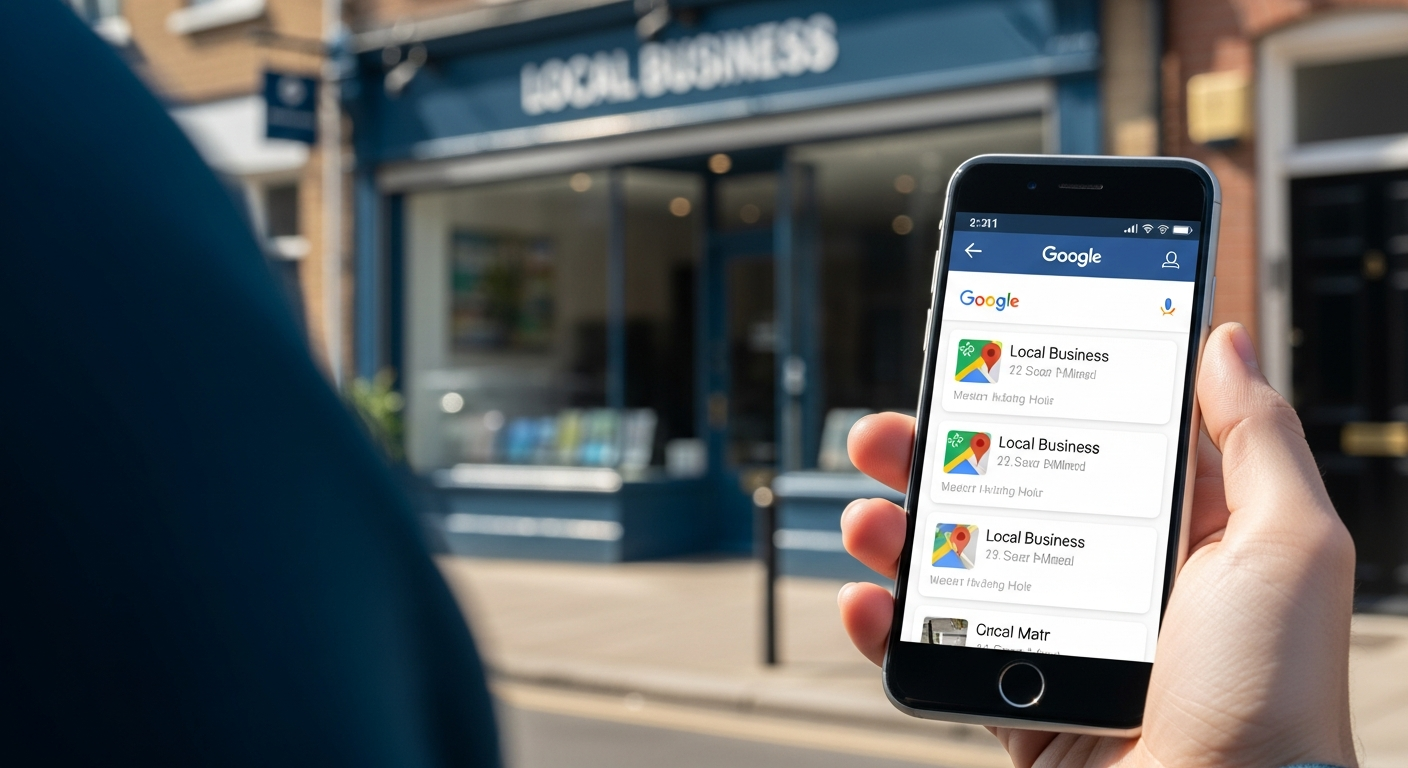
Why Your Business Shows Up in Google But Not in the Map Pack
The organic results and the Maps local pack are two different systems, and ranking in one does not carry over to the other.
TL;DR
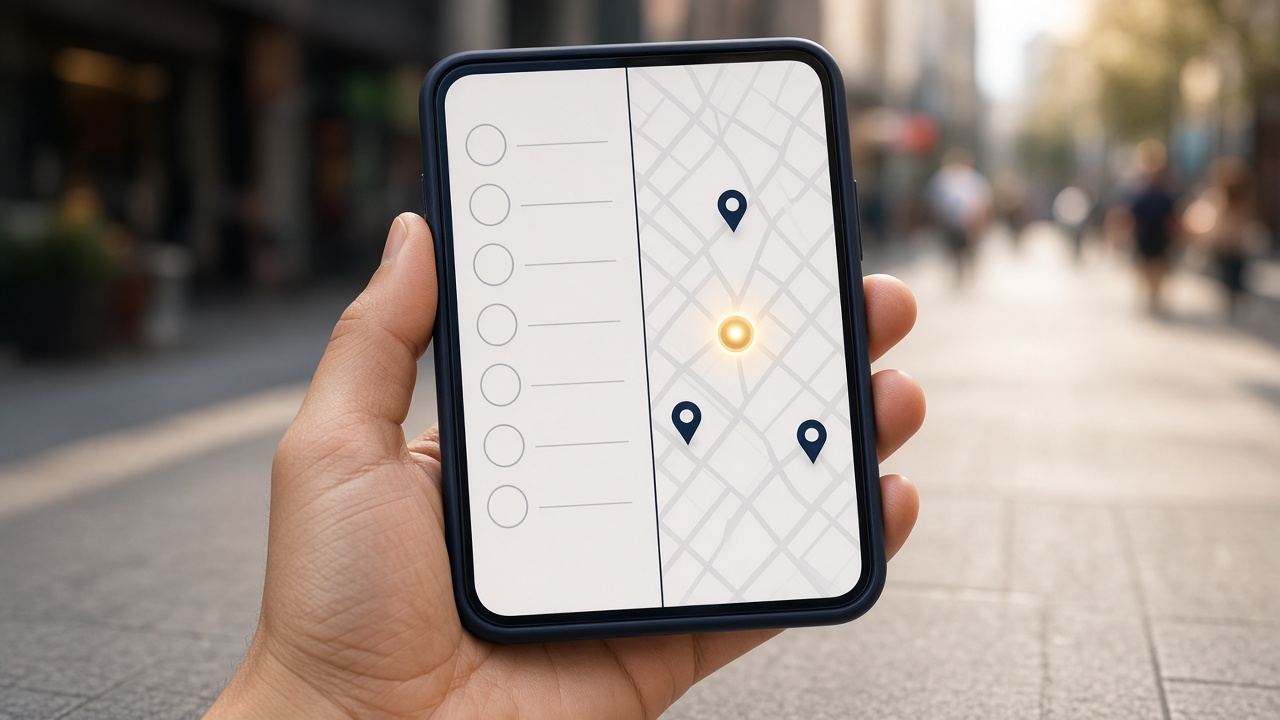
Google's blue-link results and the three-business Maps local pack use different ranking signals, so a page can rank well organically while the business is absent from the map. The pack leans heavily on proximity, a complete Google Business Profile, reviews, and consistent business data. Fix those, and you improve your odds of appearing in the pack for nearby searchers.
If your website ranks on page one but your business never appears in the map with the three listings, you're looking at two separate ranking systems. Organic results rank web pages. The local pack ranks Google Business Profiles, and it weighs signals your website doesn't control: how close the searcher is to you, how complete your profile is, and your review history. Doing well in one doesn't move the other.
This trips up a lot of local business owners. The good news is that the pack rewards a short list of things you can actually influence.
Why are organic results and the map pack ranked separately?

They answer different questions. Organic results answer "which pages best match this query." The local pack answers "which nearby businesses best match this query." A business can have a strong website and a weak Google Business Profile, or the reverse.
Google describes local ranking as a mix of relevance, distance, and prominence. Those factors apply to your Business Profile, not your homepage. See Google's own guidance on improving local ranking on Google.
So when you rank organically but not in the pack, it usually means your Business Profile isn't competitive on those three factors for that specific search and location.
What actually drives the local pack?
Google names three factors: relevance, distance, and prominence.
Relevance is how well your profile matches what the person searched. That depends on your chosen categories, your business name, your listed services, and your profile description.
Distance is how far you are from the searcher or the location named in the search. It's why the pack shifts as someone moves across town, and why you can't rank everywhere. It's also the one factor you can't change.
Prominence is how well known and trusted your business is. Reviews, review volume over time, links, mentions, and your overall web presence all feed into it. Google lists reviews explicitly as part of prominence in the guidance linked above.
Since distance is fixed, your real levers are relevance and prominence.
Want this working on your numbers?
Viewmedia makes marketing you can prove, matched to real, closed sales.
How do I diagnose the gap on my own listing?
Start with the basics on your Google Business Profile.
Confirm the profile is verified, the primary category is accurate, and the hours, phone number, address, and website are correct. An incomplete or unverified profile rarely shows up in the pack.
Then search the way a customer would, from a device physically near your service area. The pack is tied to location, so what you see from your desk may not match what someone three miles away sees. A tool that checks rankings across a geographic grid gives a cleaner picture than a single search.
Finally, look at the three businesses currently in the pack. Compare their review counts, categories, and profile completeness to yours. That comparison usually surfaces the gap fast.
What changes actually help you enter the pack?
Stick to the signals Google names and that you can control.
Complete the profile fully. Fill in categories, services, service areas, hours, and photos. A thin profile won't beat a complete one.
Choose the right primary category. This is one of the strongest relevance signals. Pick the category that describes your core business, not a broad or aspirational one.
Build reviews steadily. Volume, recency, and responses all matter. A few reviews every month looks healthier than a burst followed by silence. Our guide on getting reviews that help you rank covers how to ask without violating Google's rules.
Keep your name, address, and phone number consistent everywhere online. Inconsistent business data across directories weakens prominence and can confuse Google about which listing is authoritative. It also affects how AI tools cite you.
Earn relevant links and mentions from local sources. Local news, chambers of commerce, suppliers, and community sites all add to prominence over time.
Why can't I rank in the pack everywhere I serve customers?
Because distance is a ranking factor you can't override. A business physically located downtown has a proximity advantage for downtown searches that a business in the suburbs doesn't, and vice versa.
Service area businesses feel this most. You may serve an entire county, but the pack still favors profiles near each individual searcher. Strong reviews and a complete profile can extend your reach, but you won't appear in the top three for every neighborhood.
Adjust your expectations accordingly. The goal is to win searches near your actual location and compete well in the areas closest to you, not to blanket an entire region.
For definitions of the terms used here, see the Glossary, and for the wider picture on getting found in Google and AI answers, see Local SEO & AI Search.
Founder, Viewmedia
Brian Wroblewski is the founder of Viewmedia. For more than two decades he has helped local and regional businesses turn marketing spend into provable, closed sales.