What Answer Engine Optimization Is and How to Do It
A plain explanation of answer engine optimization and the practical steps that make your business the answer instead of a link.

TL;DR
Answer engine optimization (AEO) is the practice of structuring your content so search engines and AI tools can quote you directly as the answer to a question. You do it by writing clear question-and-answer content, adding structured data, and keeping your business facts consistent everywhere. It overlaps heavily with good SEO, so most of the work also helps your normal rankings.
Answer engine optimization (AEO) is the practice of formatting and structuring your content so search engines and AI tools can pull a direct answer from it and show that answer to a user. Instead of chasing a spot in a list of blue links, you write and mark up your content so a machine can lift a clean, factual response and attribute it to you. Most of the work is standard content and technical hygiene, applied with a question-and-answer mindset.
What is AEO in plain terms?
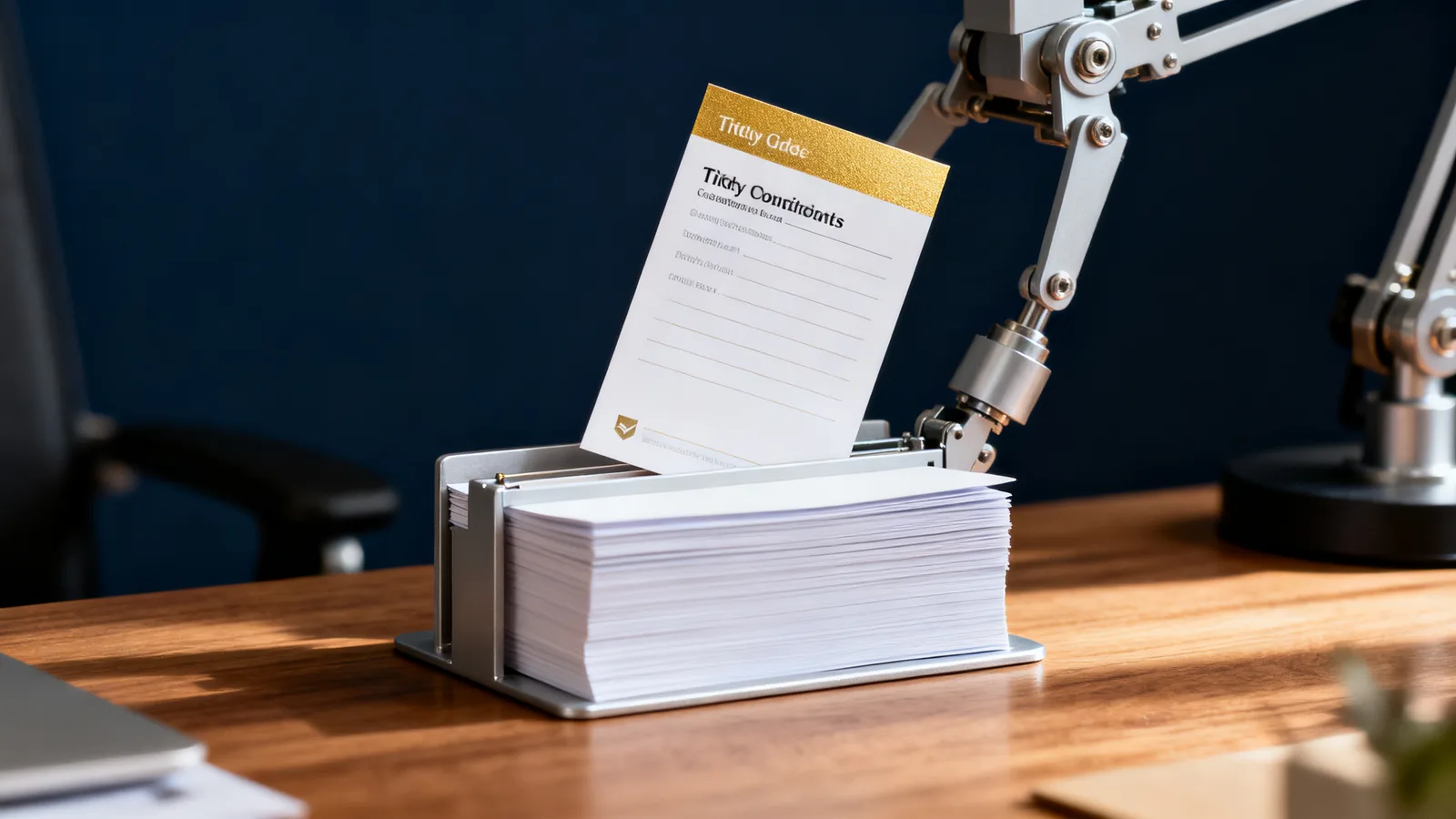
AEO is optimizing for the moment a search engine or chatbot answers a question directly rather than sending someone to click a link.
Google has been doing versions of this for years. Featured snippets, the boxed answer that sometimes appears at the top of results, pull a short passage from a page and display it above the normal listings. Google's own documentation describes featured snippets as programmatically selected content that best answers a user's query.
The newer piece is generative answers. Google's AI Overviews and tools like ChatGPT and Perplexity now compose a written answer and sometimes cite their sources. AEO is the work of being one of those cited sources.
The three-letter labels overlap considerably. SEO is getting found in traditional results. AEO is being the direct answer. GEO, or generative engine optimization, is being cited inside AI-written responses. In practice, the same clean content and structured data help with all three. You can see how they fit together in our Local SEO & AI Search pillar.
How is AEO different from regular SEO?
The goals are close, but the format and intent differ. Regular SEO is largely about ranking a whole page. AEO is about making one specific answer easy to extract.
That changes how you write. For AEO, you lead with the answer in the first sentence or two, then explain. You phrase headings as the actual questions people ask. You keep answers self-contained so a machine can quote a paragraph without needing the rest of the page for context.
You also think in facts. Answer engines prefer content they can verify against other sources. A specific, checkable statement is far easier to trust and quote than a vague marketing claim.
The good news for a skeptical owner: this is not a separate budget or a magic tool. It is a discipline layered on top of writing you should already be doing.
Want this working on your numbers?
Viewmedia makes marketing you can prove, matched to real, closed sales.
What are the practical steps to optimize for AEO?
Start with the questions your customers actually ask, then answer them one at a time.
- Write in a question-and-answer structure. Use the customer's real question as a heading, then answer it directly in the first two sentences. Google's guidance on featured snippets rewards content that clearly answers a query.
- Keep each answer self-contained. Assume a machine may lift that one paragraph and show it alone.
- Add structured data. Schema.org markup, including FAQ and Organization types, gives search engines a labeled, machine-readable version of your content production. Google supports several structured data types that can affect how results appear.
- Keep your business facts consistent. Your name, address, and phone number should match across your website, your Google Business Profile, and every directory listing. Inconsistent facts make you harder to trust and quote. See how NAP consistency affects your local rankings and AI answers for a deeper look at why this matters.
- Be specific and cite sources. Concrete numbers, dates, and named sources are easier for an engine to verify and reuse.
- Cover the follow-up questions. Answer what a reader would naturally wonder next, so your page becomes the fuller source.
If you sell locally, an accurate and complete Google Business Profile matters here too, because AI tools often pull from that data when answering local questions. Learn how to get your business cited in AI search answers to make the most of that visibility.
Does AEO replace normal SEO?
No. AEO is an extension of SEO, not a replacement.
An answer engine still needs to find and trust your page before it can quote you. That means the basics still apply: a crawlable site, fast-loading pages, useful content, and links from credible sources. Google has repeatedly said there is no separate ranking system for AI features that throws out its core quality signals.
The practical read is straightforward. Do solid SEO, then format your content so it is easy to extract and easy to trust. You are not running two separate strategies. You are doing one job well and making it legible to both people and machines.
How do you measure whether AEO is working?
Measurement is harder than tracking traditional rankings, because a direct answer may not produce a click. Track a few signals together rather than fixating on one number.
Watch for featured snippet and AI Overview appearances on the questions you target. Search Console shows impressions and clicks, and rising impressions with steady clicks can signal you are appearing in answer formats.
Test your own questions in ChatGPT, Gemini, and Perplexity. Note whether your business is mentioned or cited, and do it on a consistent schedule so you can spot change over time.
Then watch the outcomes that actually pay the bills: calls, form fills, and bookings. If you want to tie those outcomes back to what drove them, Matchback Reporting gives you a way to connect marketing activity to actual closed sales. If you want plain definitions of these terms in one place, our Glossary has you covered.
Sources
- Google I/O 2024 official announcement of AI Overviews rolling out to all U.S. users (Google Blog)
- Featured Snippets and Your Website | Google Search Central
- AI Features and Your Website | Google Search Central
- Structured Data Markup that Google Search Supports | Google Search Central
- Schema.org FAQ | schema.org
Founder, Viewmedia
Brian Wroblewski is the founder of Viewmedia. For more than two decades he has helped local and regional businesses turn marketing spend into provable, closed sales.